
Material intelligence / Field guide
Choosing Adhesives for Wall Panels: Compatibility and Bond Trials
A designer’s guide to matching panel backings, prepared walls and adhesive instructions—and recording what a representative trial can establish.
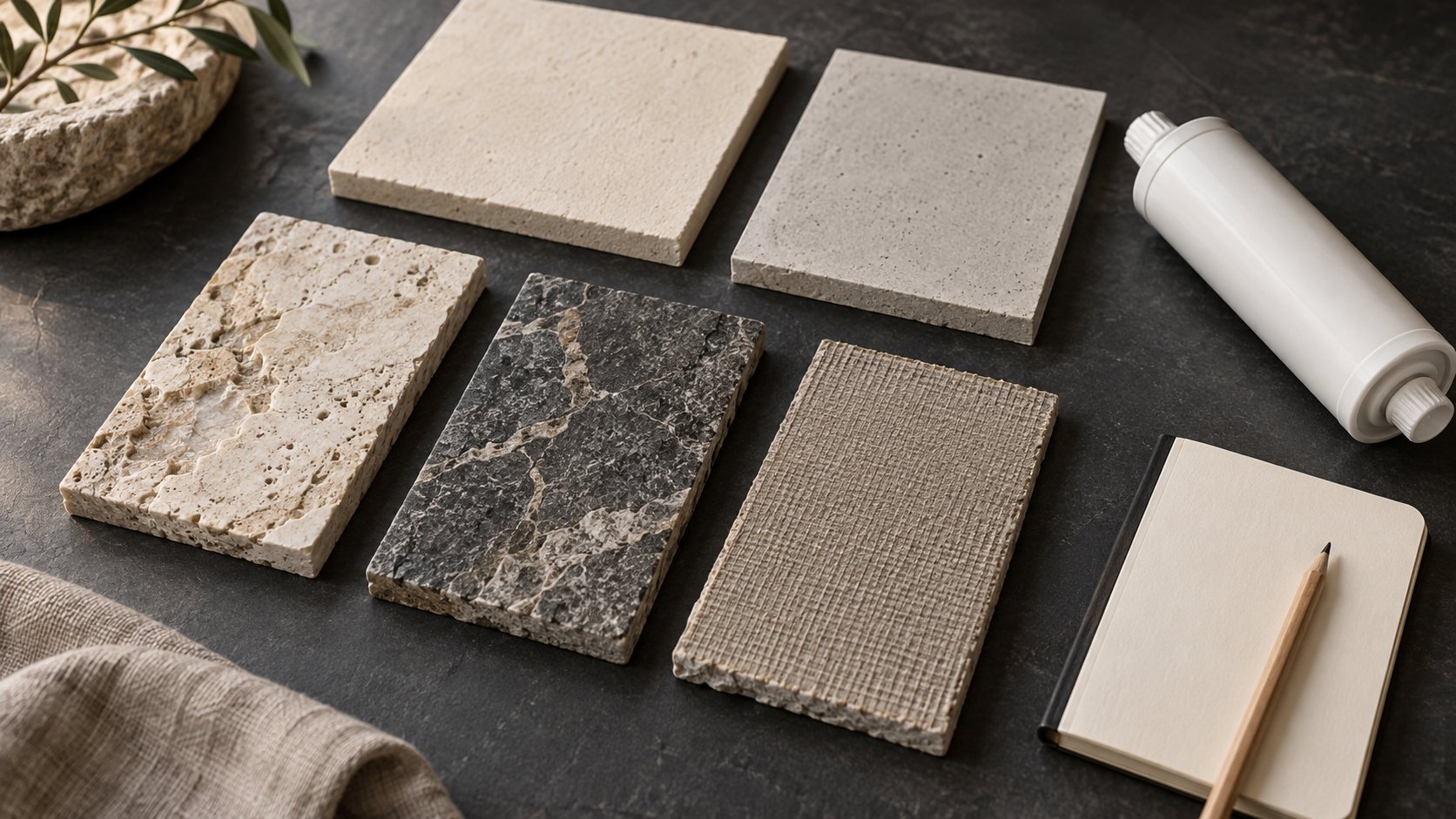
The finish is approved, the wall is prepared and the installer proposes an adhesive they have used before. The remaining question is specific: will that adhesive work with this panel backing, this prepared wall and the conditions in which the assembly must perform?
Wall panel adhesive compatibility is a relationship between materials and application conditions. A product described as suitable for “stone,” “wood” or “panels” may still exclude a particular backing, coating or use. For designers, the useful outcome is a documented bonding method tied to the actual wall package, with clear checks before installation.
At a glance
Choose an adhesive for decorative wall panels by confirming the exact panel backing, receiving surface, intended use and installation conditions. Check both manufacturers’ current instructions, including exclusions and preparation requirements. Agree a representative bond trial and its acceptance criteria before testing. Use the result to inform the specified installation method, not as a substitute for required engineering or system approval.
- Identify the surfaces the adhesive actually touches, including coatings and primers.
- Match the trial to the proposed materials, preparation, application and curing conditions.
- Record appearance and the location of any separation, as well as the agreed test result.
1. Identify both bonding surfaces before choosing the glue
The decorative face does not necessarily identify the bonding surface. A mineral appearance may sit on a composite backing; a gilded finish may be applied to a board whose rear surface differs from its face. Record the panel product reference, backing material and any factory-applied rear coating. If these are unknown, ask the panel supplier before selecting an adhesive.
Describe the receiving wall just as precisely. “Concrete wall” is incomplete when the adhesive will actually contact paint, skim coat, sealer or a repair layer. The bond depends on those intervening layers remaining attached too. Review our wall substrate assessment guide for the condition checks that should precede adhesive selection.
Then identify the application: interior or exterior, vertical wall or another orientation, panel format, installed weight, expected moisture exposure and relevant movement. Confirm whether adhesive-only installation is permitted for that application. A trial cannot authorize a fixing method that the project or panel system does not allow.
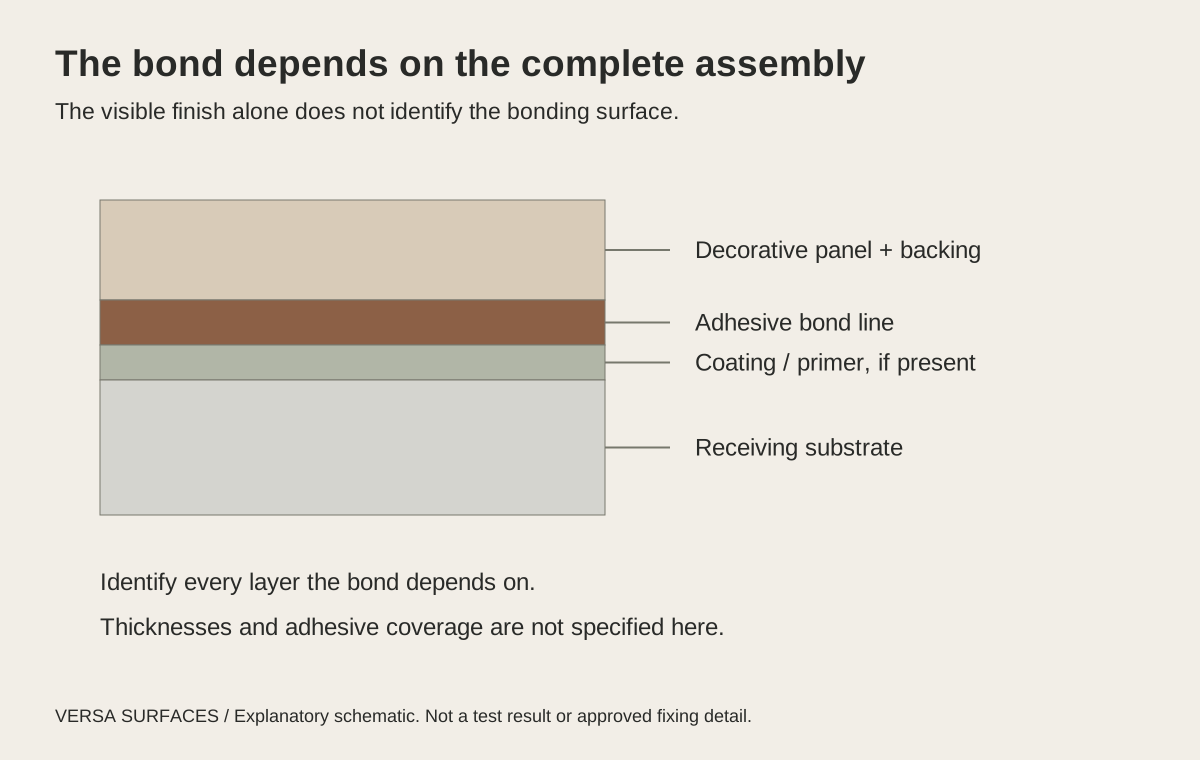
Use the architectural wall panel materials guide to clarify the construction first. “Flexible Stone,” for example, should not be treated as one universal backing or one universal adhesive requirement.
2. Read the limitations and method, not just the material list
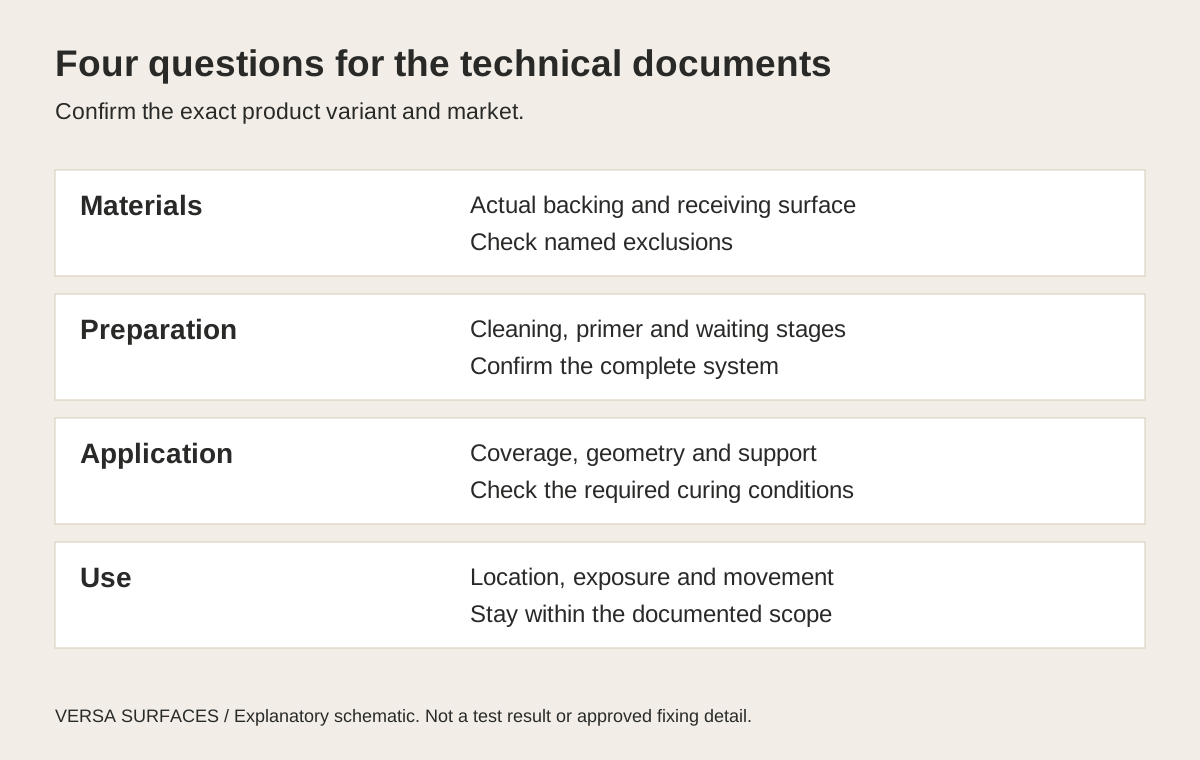
Obtain the current technical data sheet for the exact adhesive sold in the project’s market, together with the panel installation instructions. Check that product names, variants and document revisions match the supplied containers. Similar branding does not establish identical formulation or permitted use.
A manufacturer’s material list is a starting point. For example, Henkel’s specification document for Loctite PL Premium identifies polyethylene, polypropylene, PTFE and flexible vinyl among its application limitations. The practical lesson is to check the precise material and exclusions. This example is not a recommendation of that adhesive for Versa panels.
Preparation is part of the adhesive system. Confirm cleaning, permitted abrasion, primer or activator, drying or flash-off requirements and the condition of both surfaces before assembly. Sika describes its SikaTack Panel Primer as a treatment specifically formulated for SikaTack Panel adhesives and calls for trials with actual substrates and conditions. That named façade system illustrates why a primer should not be treated as an interchangeable accessory.
Review the application method with the installer: specified coverage or bead arrangement, bond-line requirements, positioning time, pressure or support, and curing conditions. Follow the selected system’s instructions rather than copying an application pattern from a different product. Do not assume that additional adhesive will compensate for poor flatness or uncertain compatibility.
| Document check | Question to resolve | Design implication |
|---|---|---|
| Substrates and exclusions | Are the actual backing and wall surface covered? | A familiar surface name may conceal an excluded layer |
| Preparation | Which cleaning and pretreatment steps are specified? | The preparation sequence must be achievable on site |
| Application and cure | What conditions, geometry and support are required? | Programme and detailing must allow the complete method |
| Exposure and movement | Does the intended use fall within the stated scope? | An indoor sample does not establish exterior suitability |
| Finish interaction | Are staining, distortion and cleanup compatibility addressed? | A bond can hold while the visible finish becomes unacceptable |
Use the safety data sheet for handling precautions alongside the technical instructions. A safety data sheet does not establish that the adhesive is suitable for the selected panel assembly.
3. Agree a representative bond trial before work starts
A bond trial is a controlled check of a proposed combination. Agree its purpose with the panel supplier, adhesive supplier and responsible project team: screening compatibility, confirming a preparation method, reviewing appearance, or performing a specified adhesion test. These are different questions and may require different specimens or procedures.
Use the actual panel backing and a representative receiving surface, including the intended coating or primer. A clean piece of bare board is not representative of a coated, repaired wall unless the preparation will produce that same surface. For site testing, identify the wall zone and obtain agreement before carrying out any destructive assessment.
Record the adhesive reference and batch, sample identities, surface preparation, application method, assembly time, support and curing conditions. Follow the manufacturer’s cure requirements for the tested configuration. Initial grab, a dry-looking exposed edge or a short hand check does not establish that the whole bond has reached its required condition.
Have the responsible party define the test method, number of specimens, evaluation timing and acceptance criteria before the trial. Where a specified quantitative adhesion test is required, it should be carried out and interpreted by an appropriately qualified party. Do not invent a universal pull-off value or use an informal hand-pull as a structural approval.
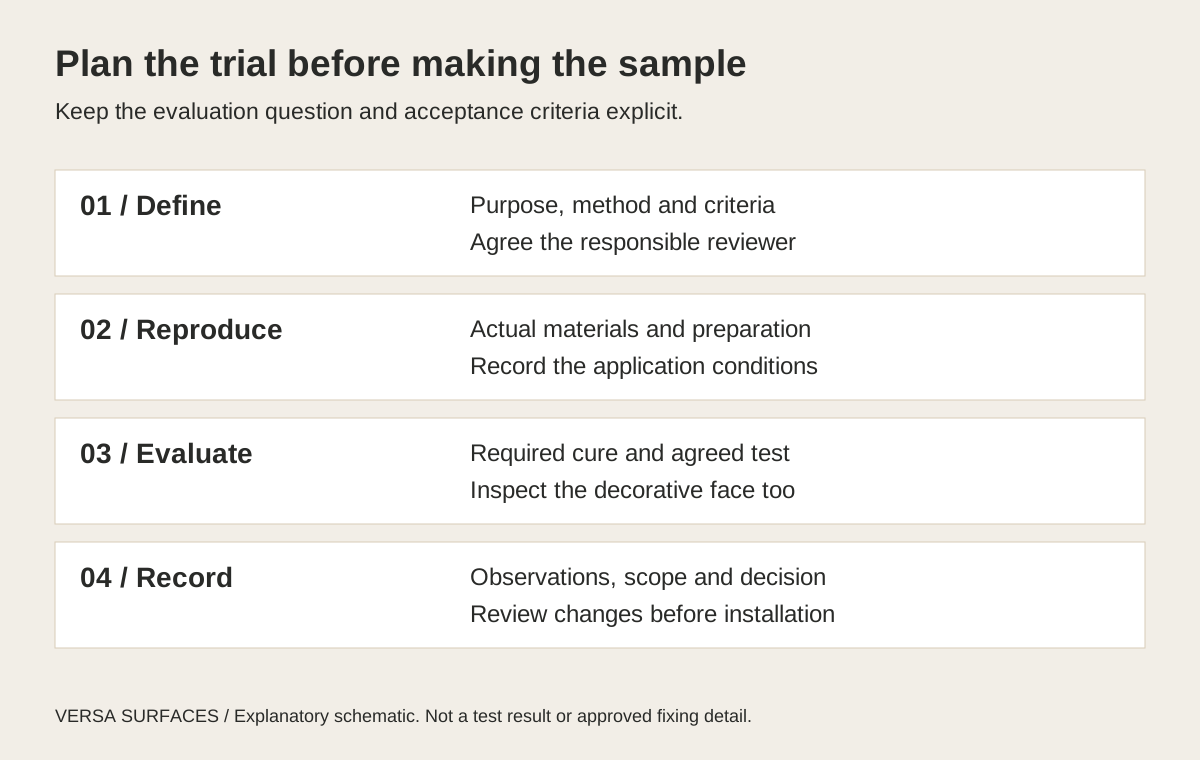
If comparing candidates or preparation methods, label each combination and keep the other relevant conditions consistent. A sample with a different primer, curing period and adhesive thickness cannot isolate which change caused a different outcome. Keep photographs and observations linked to the sample labels.
4. Read the result at the interface and at the finish
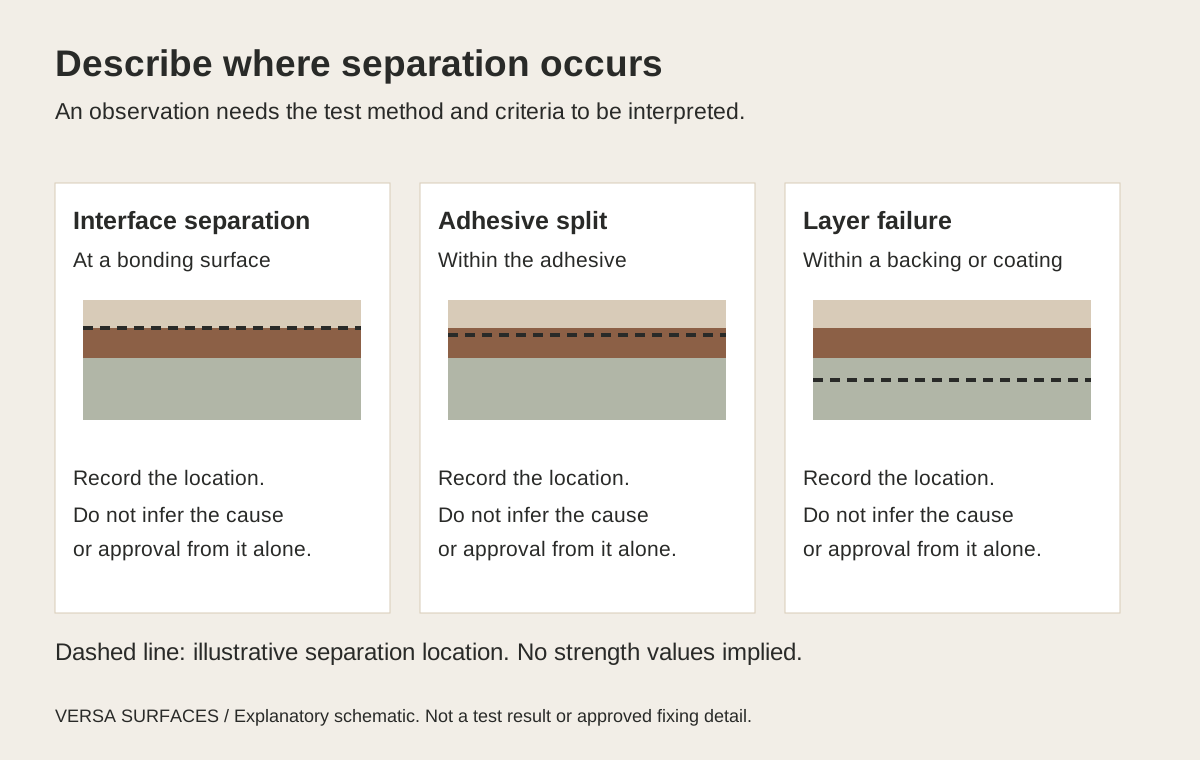
When a specimen is evaluated under the agreed method, record where separation occurred. Separation at the panel-to-adhesive or wall-to-adhesive interface, a split within the adhesive, and tearing of a backing or wall coating describe different observations. They do not, by themselves, establish the cause or a pass/fail decision.
For instance, paint remaining attached to the adhesive while lifting from the wall points to a failure involving that coating layer. It does not prove that a stronger adhesive is the solution. Conversely, visible material tearing does not establish an adequate capacity for the intended installation without the agreed test criteria and system assessment.
Inspect the decorative face as well: look for staining, changes in sheen, distortion or visible impressions associated with the trial assembly. Compare against an identified unbonded reference where useful, under consistent lighting. Record the observation time, because an immediate appearance check and a later review answer different questions.
Put unexplained separation, incomplete cure, finish changes or inconsistent results on hold. Send the supplier the complete sample record, photographs and the test method used. Resolve the cause and agree whether preparation, materials or the fixing approach should change before repeating the relevant check.
5. Keep a trial record that can be reproduced on site
The outcome should be a traceable method and decision, not an unlabeled sample described as “strong.” Keep the record with the current elevation, panel reference and installation instructions.
| Record | Minimum useful information |
|---|---|
| Material identity | Panel and backing, substrate layers, adhesive and pretreatment references |
| Preparation | Cleaning, permitted abrasion, primer and relevant waiting stages |
| Assembly | Specified application method, sample geometry, support and assembly time |
| Conditions | Recorded environmental conditions and actual curing duration |
| Evaluation | Agreed method, criteria, observations, photographs and test results where applicable |
| Disposition | Reviewer, decision, limitations, unresolved items and any required repeat check |
Keep trial findings within their scope. A small sample does not automatically establish full-panel behaviour, long-term durability, fire performance or suitability for another substrate. Changes in backing, adhesive, preparation, geometry or exposure should trigger review of whether the evidence still applies.
Before installation, confirm that the site team can reproduce the accepted method and maintain its required conditions. Use the pre-start wall panel installation checklist to connect the trial record to the release of the actual wall zone.
Questions designers often ask
Can one adhesive be used across all decorative panel types?
Only where the exact combinations and uses are supported by the applicable product guidance and project requirements. A shared visual category does not establish compatible backings, curing conditions or exposure limits.
Does a primer make any substrate suitable?
No. Confirm the primer as part of the selected system. It does not remove the need to assess the receiving layer, its attachment to the wall and any product exclusions.
Can a successful sample replace mechanical-fixing review?
No. The permitted fixing method depends on the panel system and project requirements. A successful sample within a defined trial does not establish that adhesive-only fixing is acceptable for every panel size, location or load.
Bring the bonding surfaces into the project discussion
Share the selected panel reference, a photograph or description of its backing, the wall construction and coatings, intended exposure and proposed adhesive. Include available technical documents and any trial findings. These details make a material and installation discussion more useful than a request for a universal glue recommendation.
Discuss your wall panel project →
References and scope
- Henkel: Loctite PL Premium performance specifications — named-product example of application limitations.
- Sika: SikaTack Panel Primer — named-system example of pretreatment and actual-substrate testing.
Sources reviewed October 11, 2026. The checklist and diagrams explain coordination and evaluation questions; they are not adhesive endorsements, reported test results or a project-specific installation approval.
Considering this surface for your project?
Tell us about your space, desired finish and project requirements. Let’s discuss material options, samples and detailing.
Discuss Your Project Request Samples