

Project at a glance
The direction in one view
Agree a master finish and an acceptable range of variation, then review several panels together under the intended light.
- Application
- Feature interior
- Design goal
- Crafted metallic depth
- Material direction
- Hand-applied gilding
- Finish direction
- Warm gilding with intentional variation
- Study status
- Concept — project validation required
- Next decision
- Define the sample and coordination brief
The design brief
Give the wall character without losing control of the composition
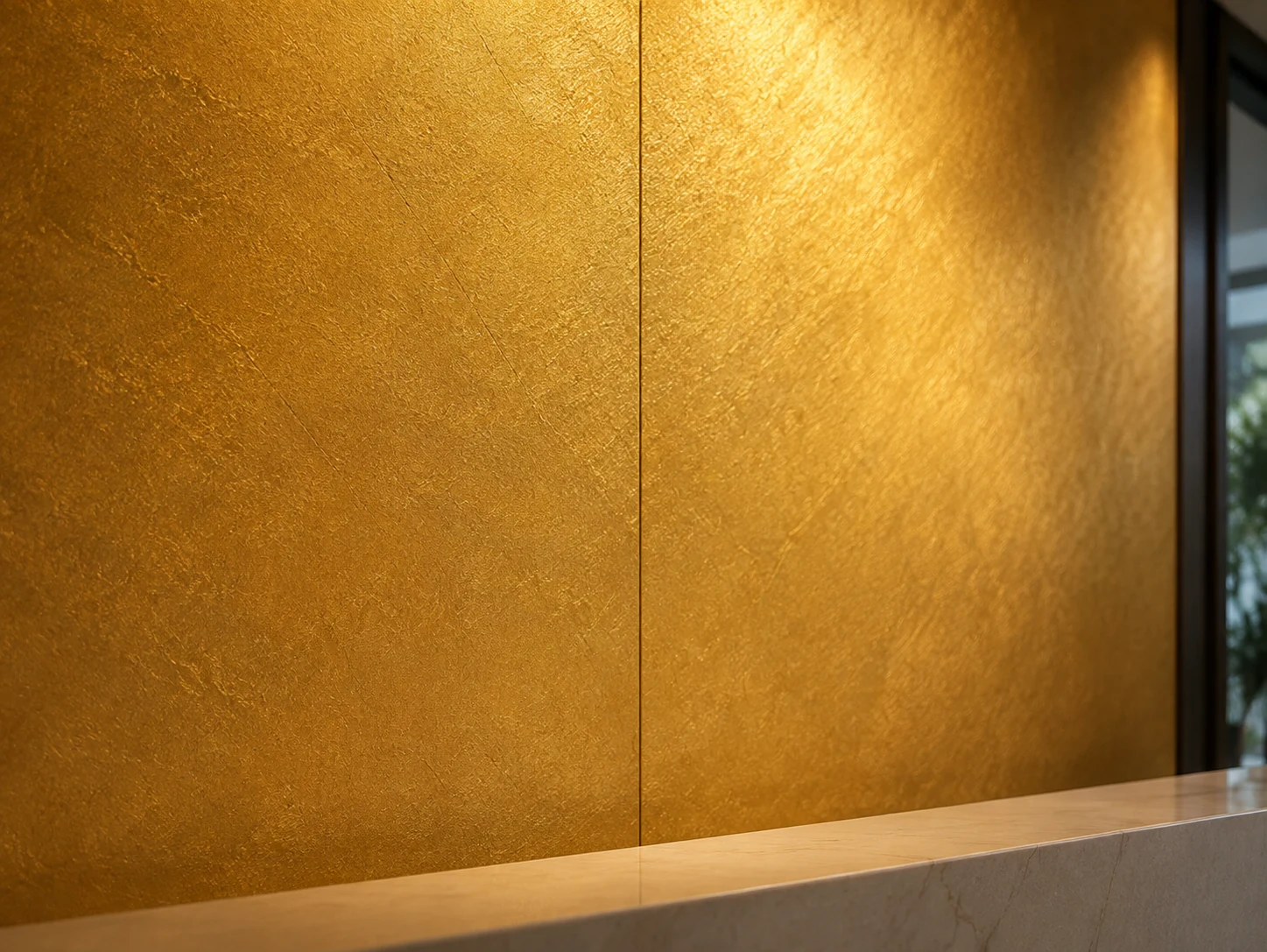
The brief is a focal surface with a warm metallic character that changes with the viewing angle. A flat gold color reference is not enough to communicate that intention. The design needs to establish how much movement, contrast and reflection the room can carry, particularly near seating, artwork or a main approach.
Begin with the surrounding material palette and the expected light sources. Identify the views where the wall should be quiet and the views where reflection is welcome. Discuss the character of hand finishing with the client early so the sample review can distinguish intended variation from a finish that falls outside the agreed direction.
Material direction
Define the finish through samples, not a color name
The proposed route is a hand-applied gilded finish. Its appearance can involve the ground, leaf placement, surface treatment and protection, so a name such as warm gold cannot define the complete result. Ask for the actual finish construction and review a representative sample rather than assuming that all metallic-looking surfaces use the same process.
Compare this direction with a more uniform printed or coated metallic effect if consistency is central to the brief. The distinction is about the desired appearance and the level of variation the project can accept. Do not imply that a gilded face is solid metal or that a particular precious-metal content is present without product-specific confirmation.
Explore Art Gilded Panels ↗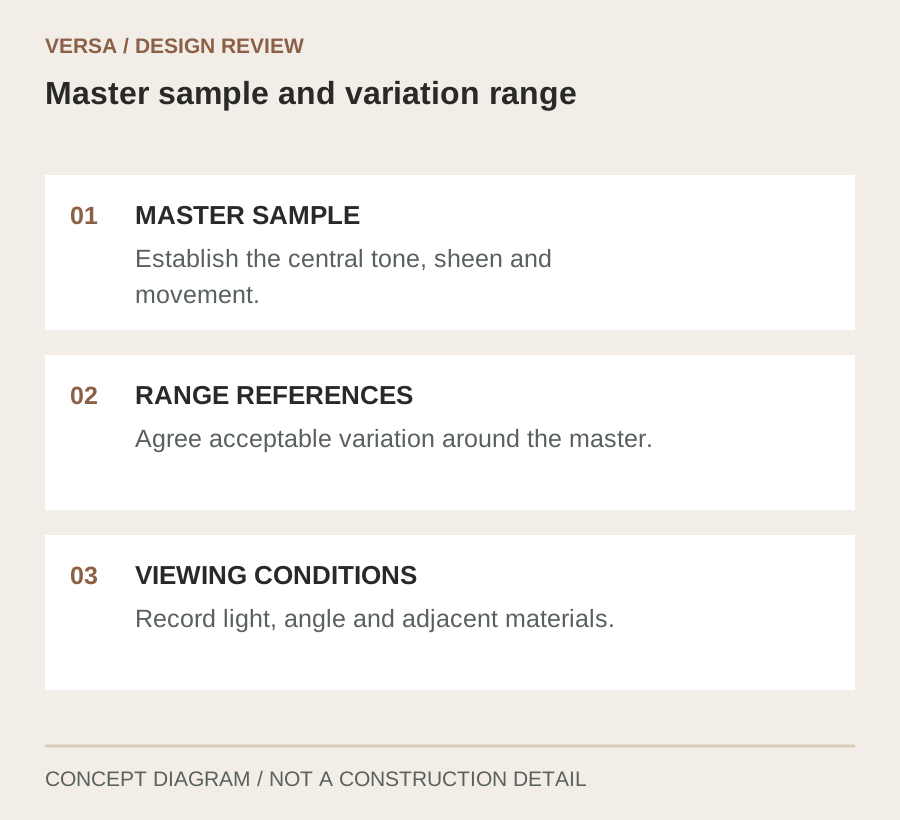
Details that shape the result
Three decisions to resolve in the design
Review sheen from several positions
Keep the sample fixed and inspect it from the approach, the seated view and an oblique angle under the intended lighting. Record those conditions with the sample reference. A frontal photograph can understate a bright reflection seen from elsewhere in the room. Review the lighting and finish together before asking production to reproduce an appearance captured under different conditions.
Agree the variation around the master sample
Use the master sample to establish the central direction, then discuss the acceptable range of movement and tonal difference. Where needed, review additional reference pieces showing the agreed range. These are visual agreement tools, not invented numerical tolerances. Record what the client accepts and which features should trigger another review.
Compose adjacent panels and protect the face
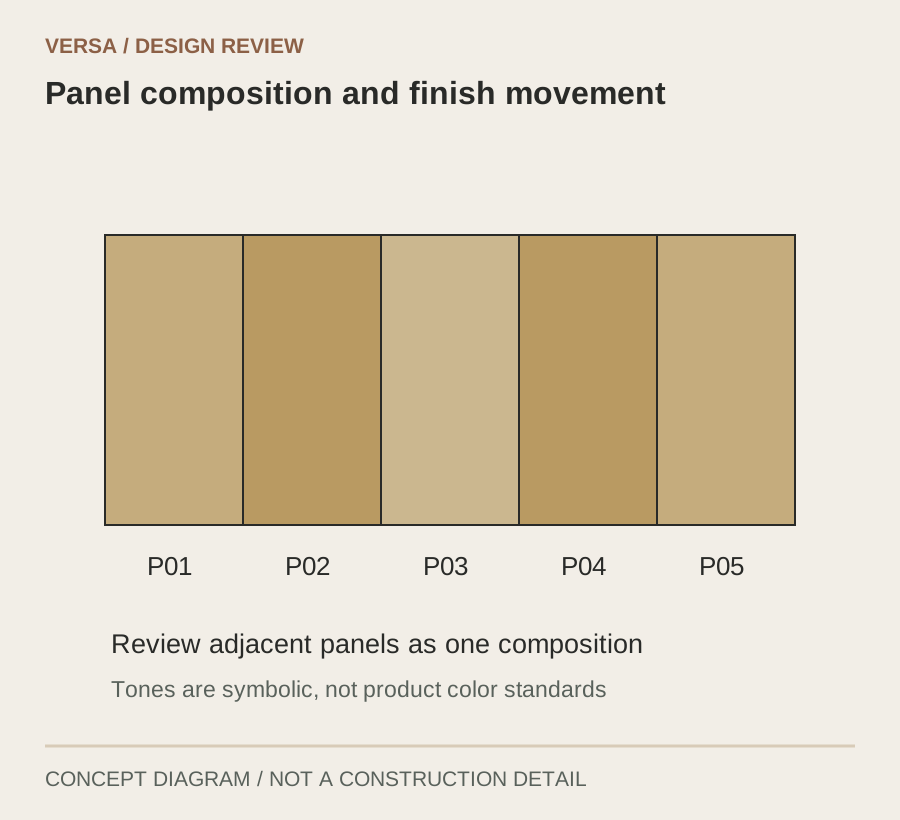
Review several panels together so lighter, darker or more active areas do not form an unintended band. Agree the intended sequence and identify visible edges. Coordinate handling and protection for the selected finish, including how protective materials will be removed. A surface that is accepted at the workshop still needs a clear plan for arriving and being installed in good condition.
From sample to specification
Make each review answer a different question
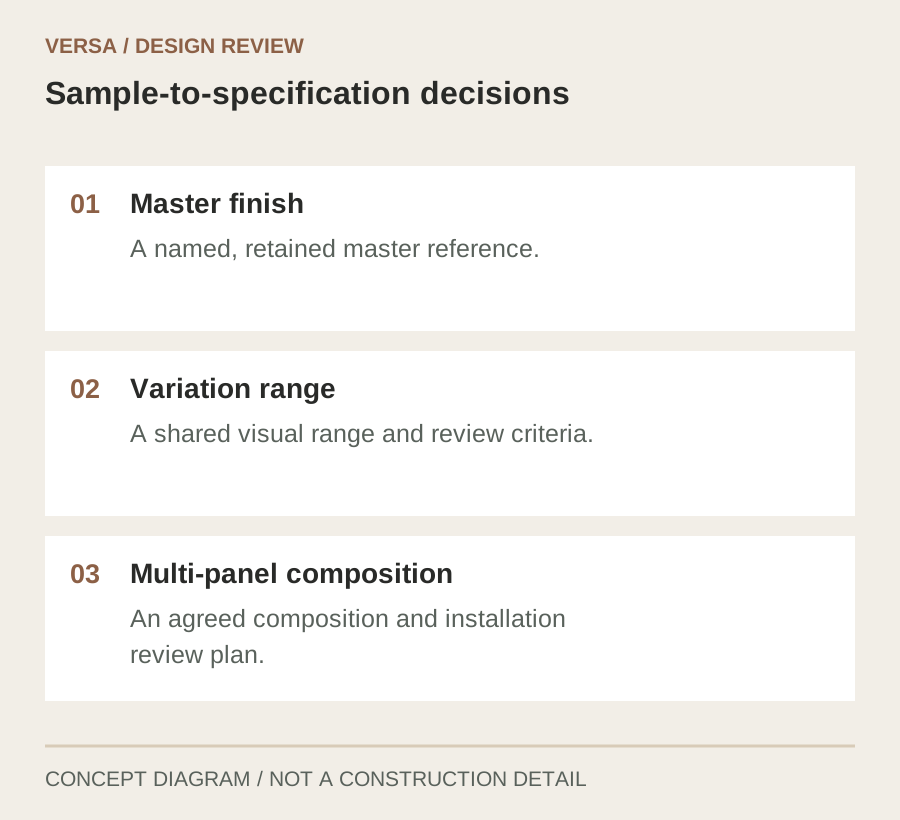
Use the following review sequence to agree the visual direction and identify unresolved conditions. These are proposed checkpoints for a new project, not records of a completed installation.
| Review | What to check | Decision to record |
|---|---|---|
| Master finish | Review tone, sheen and movement with the room palette and intended lighting. | A named, retained master reference. |
| Variation range | Compare representative references and record what differences are acceptable. | A shared visual range and review criteria. |
| Multi-panel composition | Review adjacent pieces, sequence, edges and proposed handling. | An agreed composition and installation review plan. |
Specification & coordination notes
Connect the finish to the complete assembly
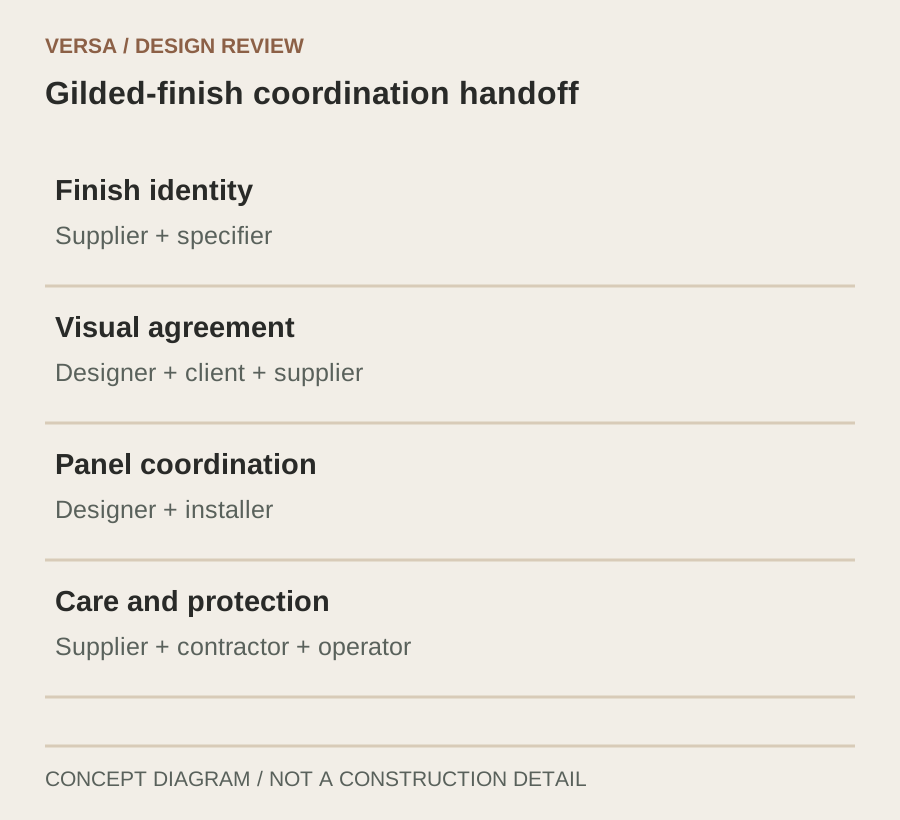
Use these notes to organize the handoff. Confirm the selected product, project conditions and responsible reviewers before treating the concept as a specification.
| Item | Information to confirm | Suggested coordination |
|---|---|---|
| Finish identity | Record leaf or metallic material, base construction and protection as supplied. | Supplier + specifier |
| Visual agreement | Retain master and range references with lighting/viewing notes. | Designer + client + supplier |
| Panel coordination | Confirm sequence, exposed edges and any adjoining materials. | Designer + installer |
| Care and protection | Agree packing, site handling, cleaning and local repair guidance. | Supplier + contractor + operator |
Applying this direction
Make handmade character part of the approval conversation
This direction may suit a lounge, reception or feature interior where a changing metallic surface is part of the atmosphere. It needs a different finish approach if the brief requires a uniform reflection at every angle or a maintenance regime that has not been confirmed for the proposed surface.
Share the wall elevation, metallic reference, surrounding palette and lighting direction. Describe the level of visual movement the client expects and whether there is an approved physical reference. These inputs help make the first sample review specific enough to progress towards a shared finish direction.
Questions designers ask
Before you make a selection
Will every panel look identical?
A hand-finished direction can include variation. Agree what is intentional through retained sample references and review multiple panels together before approving the composition.
Does gilded mean solid gold or solid metal?
No. Gilding describes a surface-finishing route. Ask for the actual leaf or metallic material and underlying construction; do not infer precious-metal content from the appearance.
Can a photograph serve as the only approval?
Use photographs to record context, but retain physical references and viewing conditions. Reflective finishes change with light and angle, which a single image cannot fully communicate.
How should a gilded surface be cleaned or repaired?
Obtain guidance for the exact finish and protective layer. Review any proposed cleaner or repair method on a suitable sample, and do not assume a repair will be visually invisible.
Related resources
Take the next design question further
Inside the Gilding Process: How Metal Leaf Becomes a Wall Finish
Read the guidance ↗Design & SpecificationHow to Specify Architectural Wall Panels: A Practical Checklist
Read the guidance ↗This is a concept case study. Spatial images are conceptual visualizations; diagrams explain design-review decisions and are not construction drawings. Confirm product specifications, performance evidence and installation details for the actual project.
 PU Stone Panel · Concept case study
 Printed Decorative Panel · Concept case study