

Project at a glance
The direction in one view
Approve the woodgrain as a numbered wall layout as well as a finish sample, so the intended scale and direction survive production and installation.
- Application
- Commercial interior
- Design goal
- Consistent custom woodgrain language
- Material direction
- Digital surface printing
- Finish direction
- Natural grain with controlled repeat
- Study status
- Concept — project validation required
- Next decision
- Define the sample and coordination brief
The design brief
Carry one grain direction through a commercial interior
The brief is to translate a chosen wood reference into a consistent wall finish across connected areas. The challenge is to preserve a natural-looking rhythm at architectural scale while making the artwork repeatable. A strong grain feature placed carelessly can draw attention to a seam, a repeated panel or an awkward cut beside a door.
Start by identifying which walls are seen together and which have different lighting. Mark doors, access panels, skirting and changes in wall height on the elevation. Decide where grain continuity matters and where a deliberate break is preferable. This creates a useful brief for artwork development rather than asking a printer to infer the room composition from a cropped reference image.
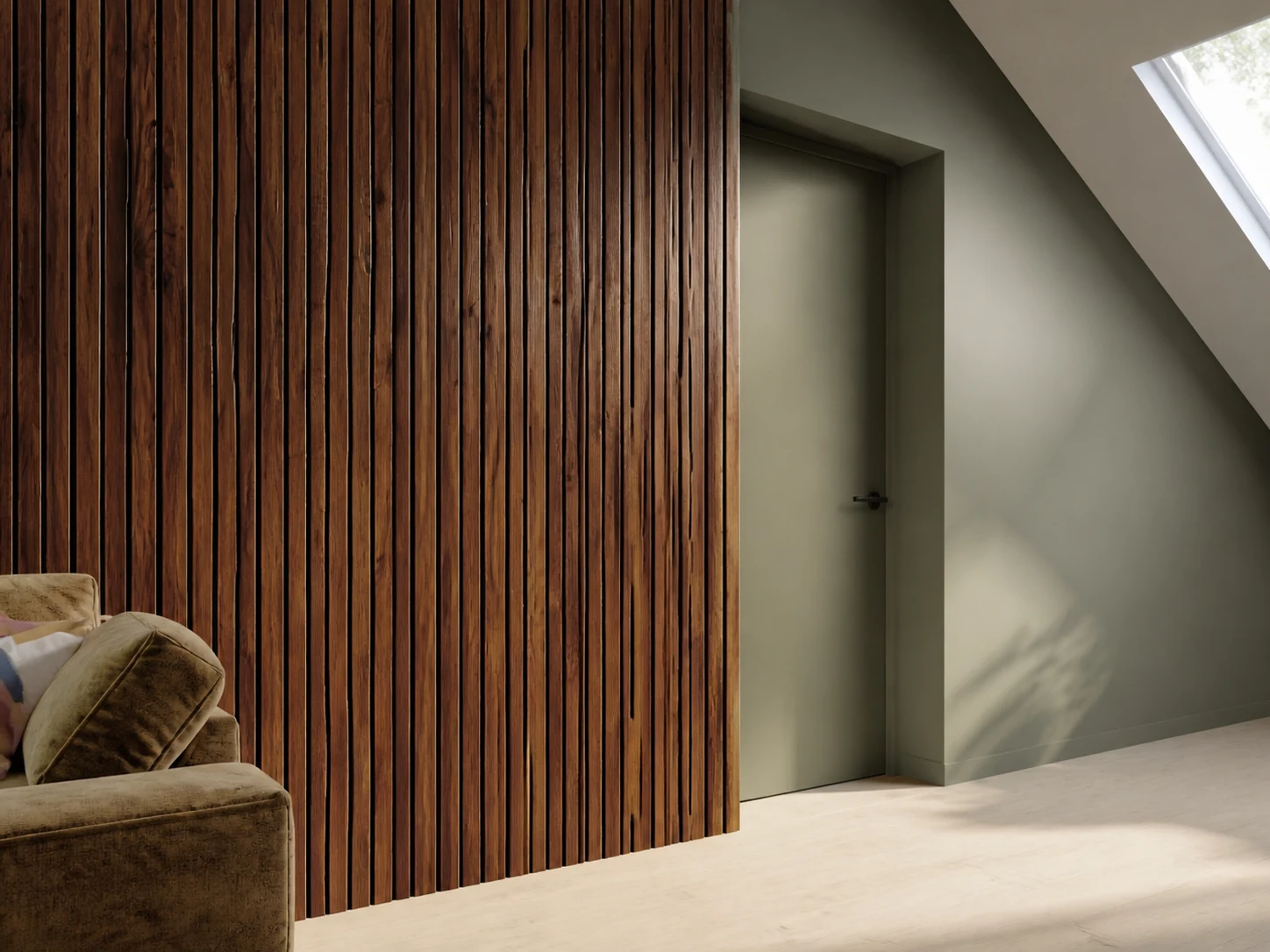
Material direction
What digital printing contributes to the design
Printing gives the team a way to review image scale, direction and tone before confirming a production reference. It does not, by itself, define the panel beneath the print or how the finished face will behave in use. Specify the base panel, printed layer and any protective finish as a complete proposed construction.
If the design also considers natural wood veneer or marquetry, compare the qualities that matter for the space. Printed grain is an image-based effect; veneer has its own material variation, while marquetry relies on an assembled pattern. The right route depends on the desired appearance, touch, edge condition and maintenance brief. A photograph of wood should not be described as a real wood surface unless the actual construction supports that description.
Explore Custom Surface Development ↗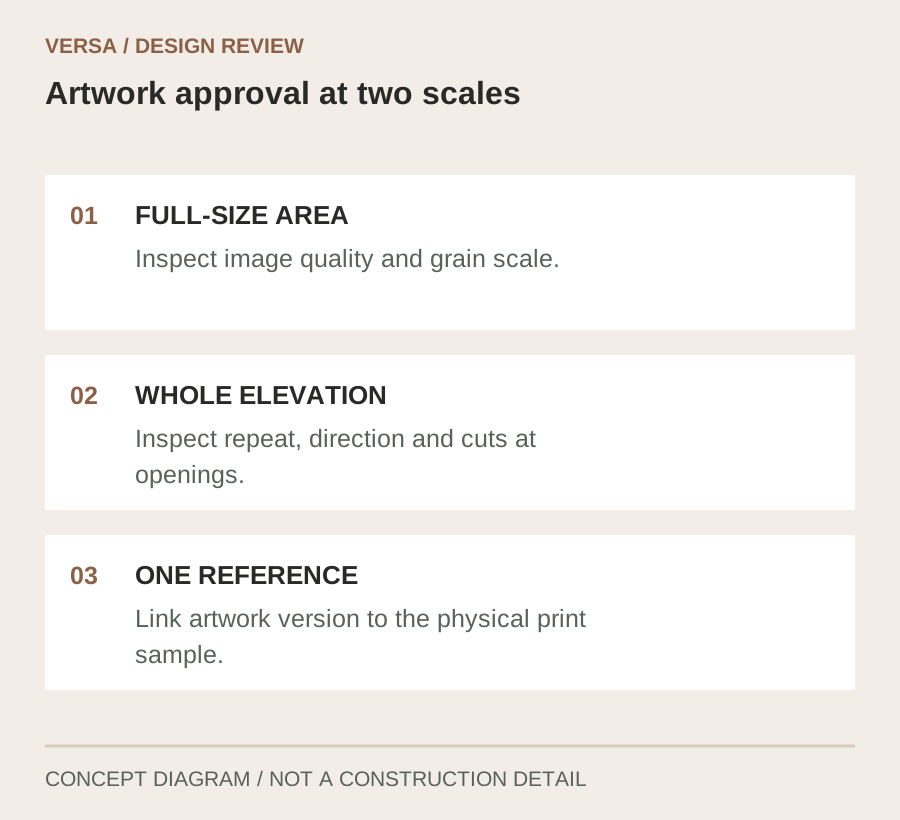
Details that shape the result
Three decisions to resolve in the design
Review the artwork at full-panel scale
Ask for a full-size portion of the proposed artwork and a reduced view of the whole elevation. These answer different questions: one reveals image quality and texture scale, the other reveals repetition. Check whether a distinctive knot or dark band appears in a regular pattern. Establish the approved repeat and panel sequence before releasing production artwork.
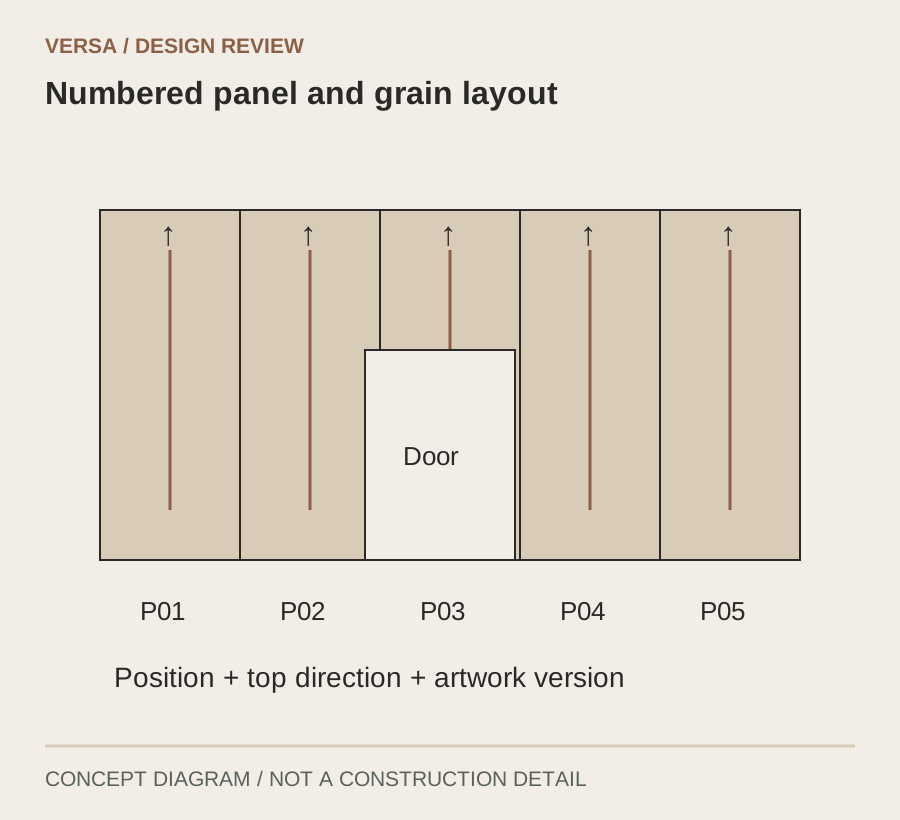
Number direction and position together
Give each panel a position and a clear top orientation on the layout. Show how grain meets at doors and removable panels. If rotation or mirroring is being considered to reduce repetition, review the actual artwork first; changing orientation can create a different visual rhythm. The installation drawing and production artwork should refer to the same panel identifiers.
Review color where the panels will be seen
Compare printed samples under the intended lighting and beside the actual adjacent materials. A screen image is a reference for discussion, not a physical color approval. Agree the approved sample, substrate and surface finish together. Where panels are supplied in stages, retain the reference and record how later production will be visually reviewed.
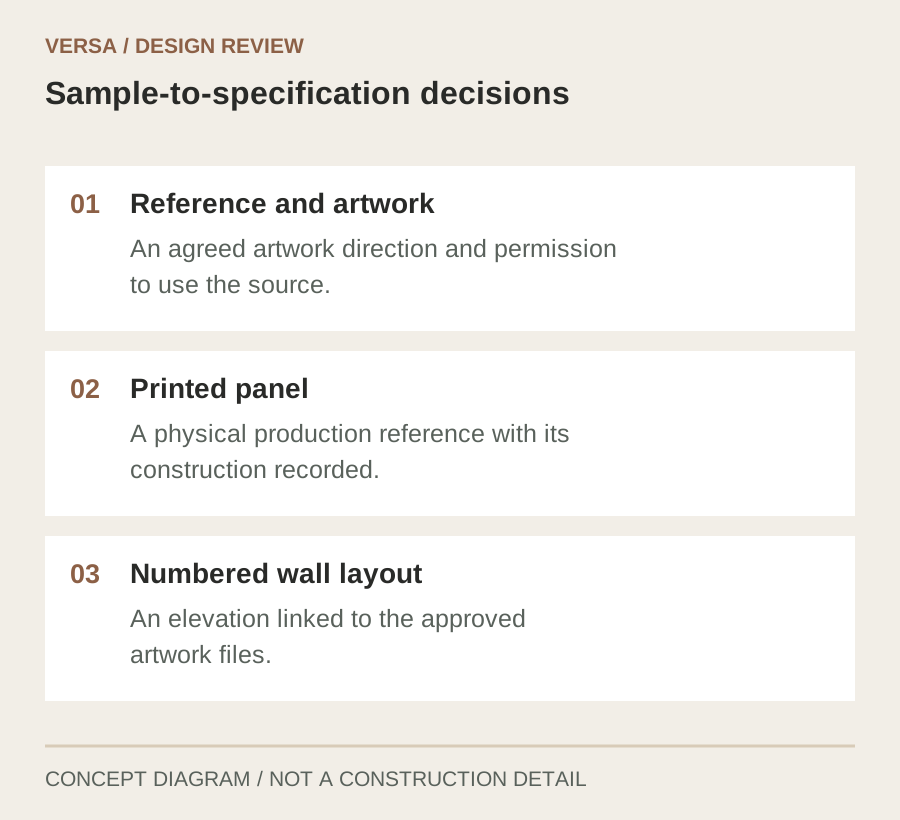
From sample to specification
Make each review answer a different question
Use the following review sequence to agree the visual direction and identify unresolved conditions. These are proposed checkpoints for a new project, not records of a completed installation.
| Review | What to check | Decision to record |
|---|---|---|
| Reference and artwork | Check image rights, source quality, grain scale and intended use of the reference. | An agreed artwork direction and permission to use the source. |
| Printed panel | Review the proposed substrate, print, protection and color under project lighting. | A physical production reference with its construction recorded. |
| Numbered wall layout | Check repeated features, door cuts, orientation and removable sections. | An elevation linked to the approved artwork files. |
Specification & coordination notes
Connect the finish to the complete assembly
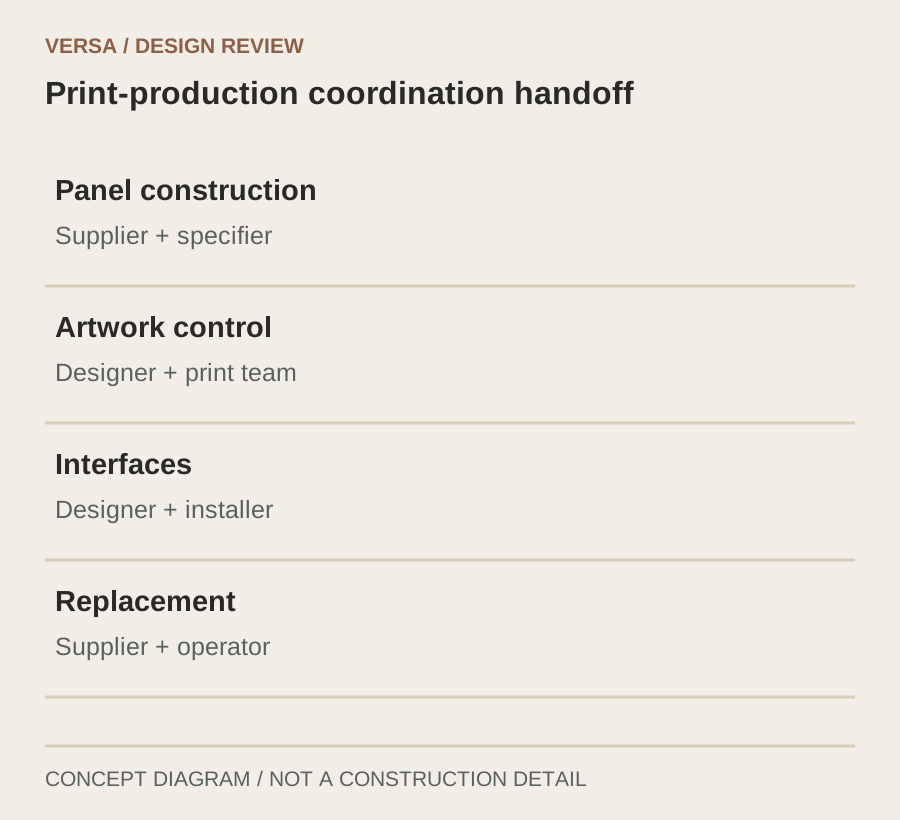
Use these notes to organize the handoff. Confirm the selected product, project conditions and responsible reviewers before treating the concept as a specification.
| Item | Information to confirm | Suggested coordination |
|---|---|---|
| Panel construction | Identify base panel, print process, finish and intended environment. | Supplier + specifier |
| Artwork control | Record file version, scale, repeat, panel number and orientation. | Designer + print team |
| Interfaces | Coordinate exposed edges, cuts, doors, fixtures and access. | Designer + installer |
| Replacement | Agree how artwork and finish references will be retained for future review. | Supplier + operator |
Applying this direction
Turn a reference image into a repeatable design instruction
This direction is useful to explore when a commercial interior calls for a coordinated printed grain across several surfaces. It needs additional review where the specification relies on the tactile qualities of actual wood, a particular substrate performance or a completely invisible transition between panels. Make those requirements explicit before selecting the finish route.
Share the wood reference, wall elevations, intended panel sizes if known, and the adjacent material palette. Identify repeated areas and doors that need special attention. A useful first review package combines a physical print sample with an artwork layout; neither should be approved in isolation from the other.
Questions designers ask
Before you make a selection
Are printed woodgrain panels the same as wood veneer?
No. Printed woodgrain describes an image-based decorative effect. Confirm the underlying panel and finish; do not infer a natural wood face from the appearance.
How can I avoid obvious repetition?
Review the full elevation, identify distinctive features and agree panel sequencing. Confirm which artwork variations or orientations are actually available before relying on them in the design.
Can a digital reference approve the final color?
Use the digital reference to communicate direction, then assess a physical sample of the proposed construction under project lighting. Screens and printed surfaces are different viewing conditions.
Can a replacement panel match later?
Retaining artwork, construction details and a physical finish reference supports a future review. It does not guarantee an invisible match to an installed surface that may have aged.
Related resources
Take the next design question further
How to Specify Architectural Wall Panels: A Practical Checklist
Read the guidance ↗Materials & ProductsArchitectural Wall Panel Materials: A Guide to Five Decorative Surface Types
Read the guidance ↗This is a concept case study. Spatial images are conceptual visualizations; diagrams explain design-review decisions and are not construction drawings. Confirm product specifications, performance evidence and installation details for the actual project.
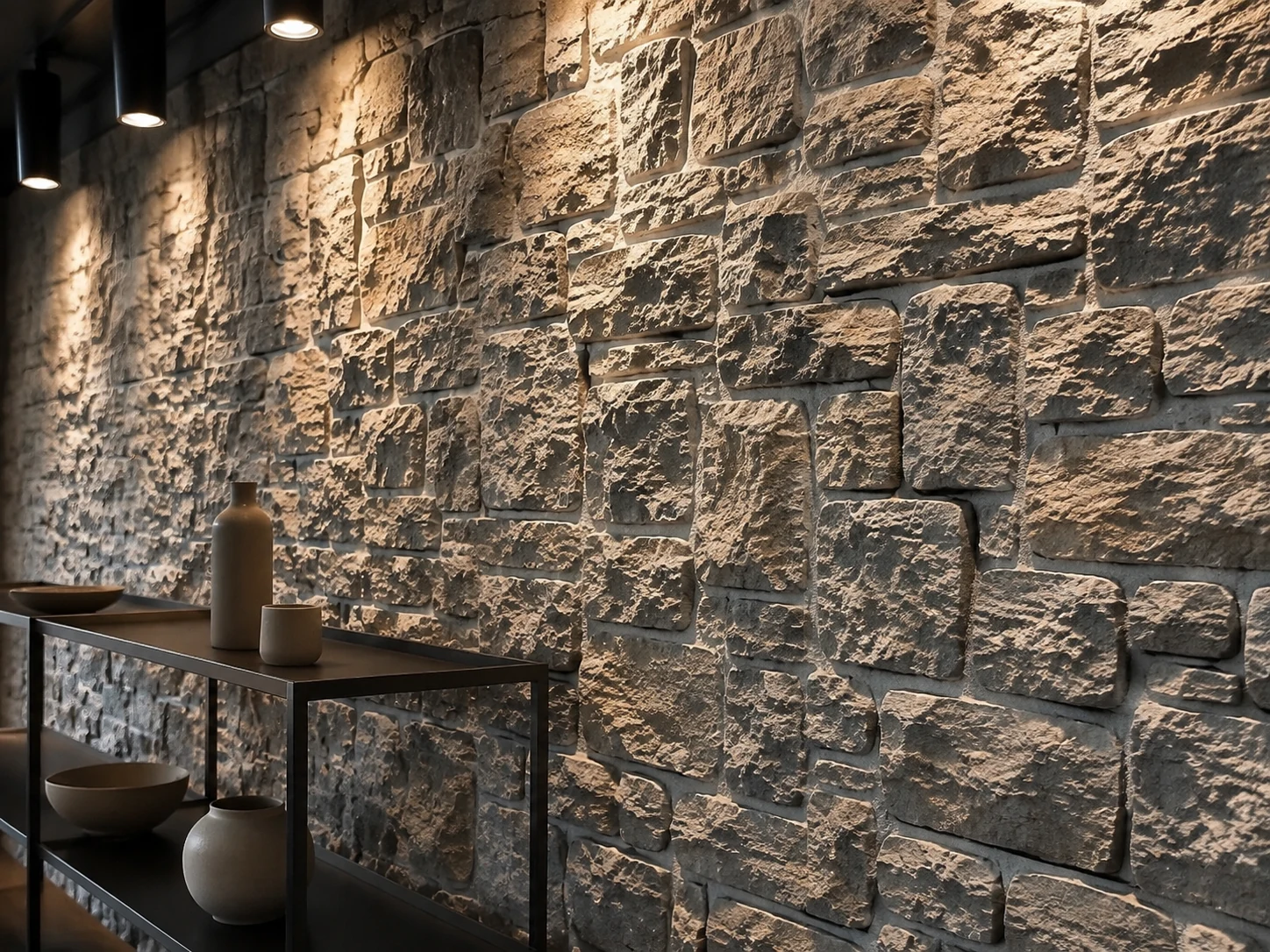 PU Stone Panel · Concept case study
 Hand-Finished Panel · Concept case study